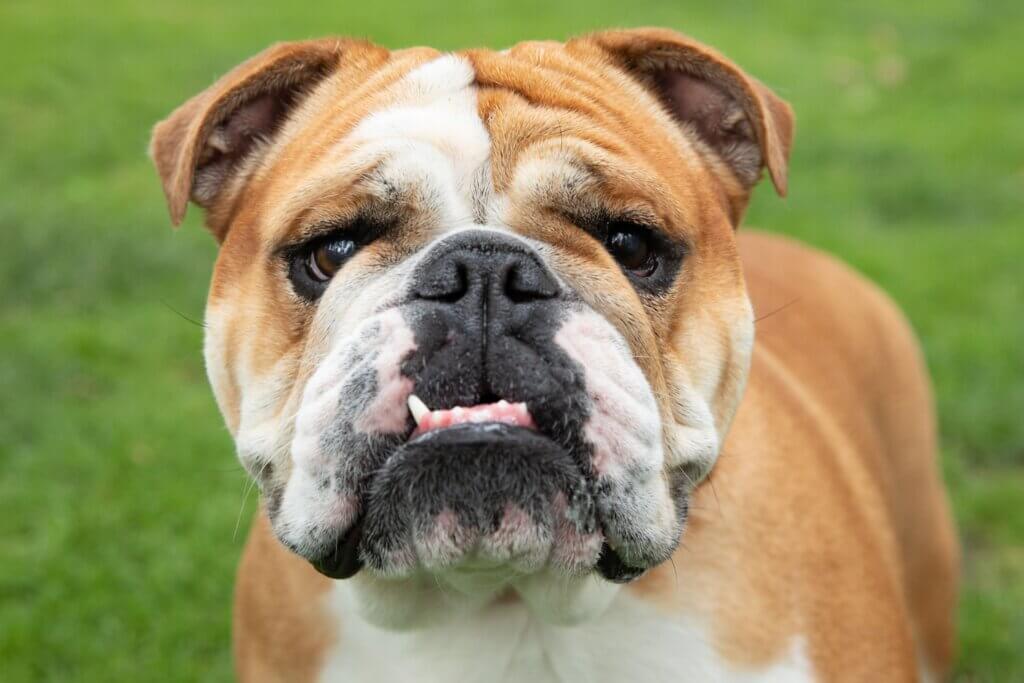
Huck, a 17-week-old male English Bulldog presented on emergency in respiratory distress. Huck came in with white mucus membranes and a respiratory rate of 60 breaths per minute, the owners thought that he may have choked on an insect outside. Shortly after coming in, Huck vomited a large amount of food with cicada wings in the vomitus. Chest x-rays revealed abnormal fluid in the lungs, likely due to an upper airway obstruction. Huck was transferred to critical care due to being oxygen dependent. The treatment of abnormal fluid in the lungs does not require the use of a diuretic like one might think. The treatment involves time, patience, and A LOT of oxygen. 72 hours later, Huck was discharged with explicit instructions to get brachycephalic airway surgery asap.
Brachycephalic dogs, like Bulldogs and Pugs, have short, compressed skulls that squeeze their airways, making it harder for them to breathe, cool themselves, and exercise normally. Because of this, they’re more prone to overheating, breathing distress, and anesthesia risks, and often need extra care (or even surgery) to stay comfortable and healthy. Most dogs can clear a minor upper airway obstruction without heading into the ER with pulmonary edema…not the brachycephalic! This case provided a very clear example of just how dramatically a brachycephalic dog can react to what is normally an insignificant issue for other dogs.
The main characteristics of brachycephalic breeds are well known:
- stenotic nares
- elongated soft palate
- hypoplastic trachea and
- everted laryngeal saccules
Additionally, they suffer from enlarged and thickened tongues, which further increases their risk of airway obstruction. The brachycephalic esophagus also experiences reflux of stomach contents and their stomachs don’t empty as quickly as the typical dog. This pooling of food makes them nauseous and when the brachycephalic vomits, we immediately worry about aspiration pneumonia.
The anesthetic needs of the brachycephalic are unique. Preoxygenating helps to boost oxygen reservoirs in the body. Due to their tendency to vomit, premedication with an anti-vomiting agent should be considered for every brachycephalic patient. Removal of their airway tube is delayed in order to prevent an airway collapse and aspiration pneumonia. While all patients need close monitoring post anesthesia, the brachycephalic should have additional checkpoints during their recovery.
In warmer and humid climates, the brachycephalic struggles with oxygenating efficiently, and they should NEVER be left outside unsupervised. Heat stroke can occur in a matter of minutes.
It is for all these reasons, and more, that it is imperative that clients are educated about the special needs and challenges of caring for the brachycephalic. We believe that pet insurance is a vital part of owning a brachycephalic breed. This peace of mind can help clients make the best decisions for their beloved family members for years to come.
Laura Gardner, LVT
Erica Desai, DVM